"Whence came my hatred?"
Antonio, Shylock and a pound of flesh

The last in a series of character analyses in The Merchant of Venice
When I began sending The Merchant of Venice down the path of tragedy that became my (and Shakespeare’s) play A Pound of Flesh, it was the characters of Bassanio and Antonio - the former an ambitious young hustler, the latter a lovelorn older man - that most intrigued me. I recognised that Portia and Shylock were important to the story but only insofar as they impinged on the actions and fate of the two men.
----------------------
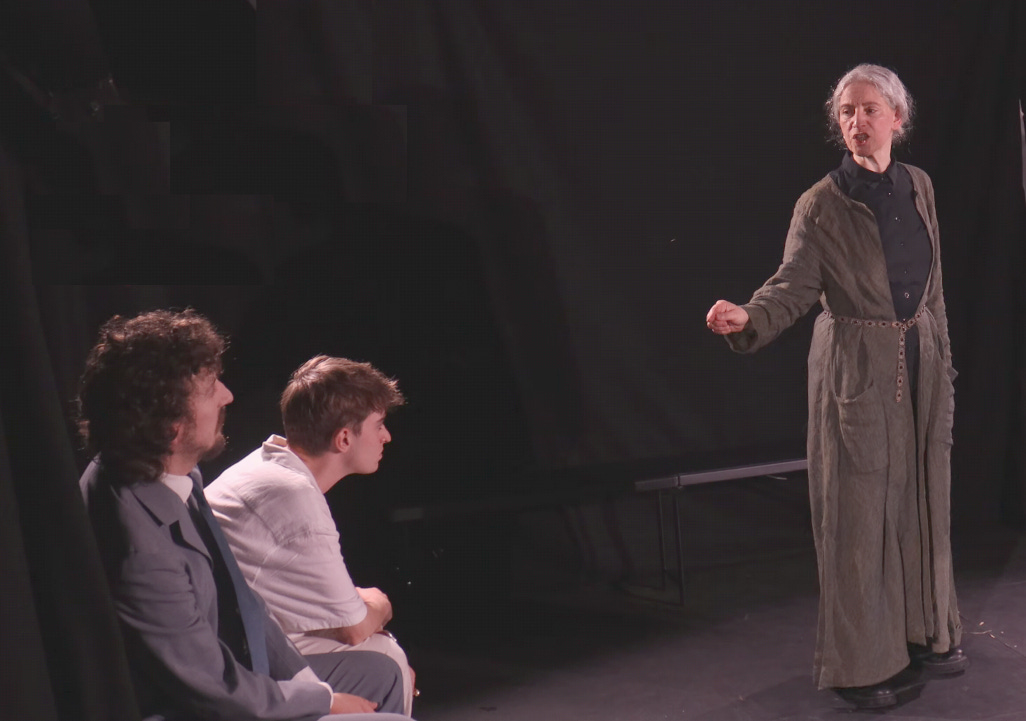
A Pound of Flesh played to enthusiastic audiences and four- and five-star reviews at the Edinburgh Fringe in 2025. Extracts from the play can be seen on youtube and more information found on Arbery Theatre.
I was also reluctant to address the question of Shylock’s Jewishness. The subject is so thick with ignorance and emotion - emotions and ignorance pushed to boiling point by the 2023 Hamas attack and subsequent war in Gaza and by the rantings of demagogues - that I felt that any comment I made on the topic would be pounced on and, often wilfully, misunderstood.
To avoid the issue, however, would be to betray the original story and weaken the alternative version that I wished to tell. I therefore considered another approach - to consider Shylock’s Jewishness and Antonio’s Christianity of little importance in themselves. (Declaration of non-interest: as far as I know I have no Jewish heritage; I was brought up Christian and have for many years been a confirmed atheist.)
To some that statement might be inexplicable or offensive. No offence is intended. Sixteenth century English playwright William Shakespeare wrote of Jew and Christian because they were familiar to him; in another time or culture it might be Tamil and Sinhalese that he put on the stage, or Tutsi and Hutu, Uyghur and Han, black and white, Catholic and Protestant; the potential list goes on and on.
Since recorded history, across the globe prejudice and violence have simmered and erupted between different religious / ethnic / racial groups. The language may change, the hostility may lie on the broadest of spectrums from insult to genocide, but whichever group is oppressor and whichever oppressed, the same lies are uttered, the same dehumanisation is practised, the same violence is meted out and suffered; the only difference being which group is demonised and how deep the antagonism runs.
However, I doubt that Shakespeare considered Shylock or his place in society as an abstract example of man’s inhumanity to man (the gender is deliberate here). I also doubt that Shakespeare held views that could be described as hostile to Jews. It is the characters and the situation, not the play nor the author, that manifest the hatred.
I cannot comment on how Shylock was portrayed in the centuries following his first appearance, although I suspect it was usually in stereotypical, unflattering light. Most modern productions steer away from such portrayals; where the audience’s ultimate sympathy lies depends very much on the director’s vision and the actors’ interpretation. As I read the text, my sympathies lie with Shylock throughout the play and my hostility is reserved for Portia, whose treatment of both Antonio - allowing him to feel that the end of his life has indeed come - and Shylock borders on the sadistic. I know, I know, it’s drama and as drama the courtroom scene certainly succeeds, but her approach always leaves me with a bitter taste in the mouth.
With those thoughts percolating, I worked on A Pound of Flesh and Antonio’s predicament. Why did he hate Shylock and why was that hatred returned? The second question is easily answered; Antonio’s treatment of Shylock - the spitting, the insults, the rescuing of debtors from the moneylender’s demands and more would inevitably lead to the moneylender’s resentment. Yet despite this treatment, Shylock offers friendship and when his friendship is spurned it is no wonder that his hatred grows.
But why does Antonio hate Shylock? There is no logic to it as there is no logic to antisemitism today. The answer is surely that he lives in a society where Jews are shunned, except when they provide such a useful service as moneylending. Antonio takes on the values of the society in which he lives and is an example of the ease with which each of us, whoever we are, wherever we live, is capable of vilifying The Other. As with all antisemitism (not to mention almost every form of negative discrimination), Antonio’s contempt for Shylocks’s Jewishness is rationale, not reason: like every other antisemite he hates and therefore he must find a cause for his hatred.
----------------------
Semite semantics
In today’s English “antisemitic” refers to negative attitudes or hostility towards Jews and only Jews. Originally, however, “semite” referred to all inhabitants of what we now call the Middle East and encompassed both Jews and Arabs, who share a common land and heritage.
That common heritage dates back thousands of years to a single society and language - Proto-Semitic, the ancestor language of modern Hebrew and Arabic (as Latin is the ancestor of Italian, Spanish and several other tongues spoken today). Even the scripts the two languages use - which to an outsider today appear so different - derive from the same Aramaic alphabet developed thousands of years ago.
That common heritage can also be seen in shared monotheism, avoidance of pork and the tradition of mutilating the genitals of young males. The fact that many Jews and Arabs see the other not as long-standing friends and family but as enemies to be killed and tortured while their land is overrun and destroyed, is one of the many tragedies and absurdities of the human species.
----------------------
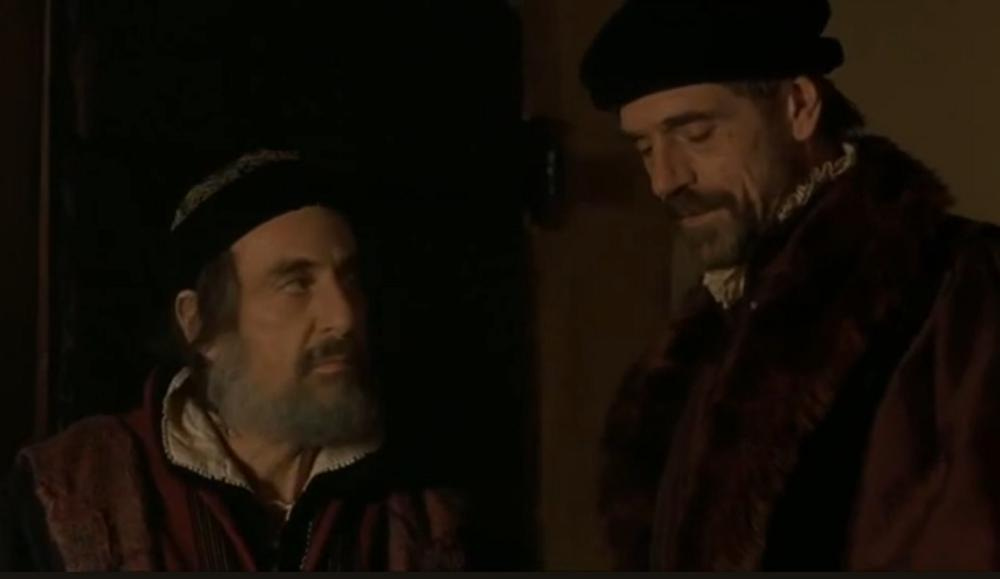
The question why Antonio hates is not explored in The Merchant of Venice. The play is complicated enough, with so many characters, plots and subplots that some important scenes do not appear. Thus, as I wrote in my last (theatre) post, we do not see the critical moment when Bassanio and Portia fall in love with each other, nor do we see when, where and how Shylock’s offer of friendship is withdrawn and replaced by his implacable desire for revenge. In A Pound of Flesh I take the liberty of bringing these events to life, firstly in a scene where Shylock is rebuffed when she (yes, she in this version) shows her concern for Antonio’s losses and later when the young lovers meet each other properly for the first time.
Above all, I allow Antonio the dramatic arc which Shakespeare denied him. As he faces his upcoming death at Shylock’s hands, the merchant asks: “Whence came my hatred? What purpose but to feed her own and bring about my doom?” and accepts that he is responsible for his own downfall. But while Antonio is granted insight into his emotions others are not. As Antonio is led from the courtroom to meet his fate the Doge (Duke) refers to Shylock’s “cursêd race” - to which Shylock can only respond: “Cursed when Christians need no ducats; good friends when you are poor”.
Why does Antonio hate? Why do any of us hate? Perhaps because we are human and that we cannot change.
----------------------
In this, my last post on The Merchant of Venice, I use the opportunity to once again thank Danielle Farrow - Shylock in the 2025 production of A Pound of Flesh - for her support and input into my work. Danielle’s interest and expertise in Shakespeare should be recognised much more widely. In addition to acting she also tutors in person and online. See daniellefarrow.com
----------------------